“Our audience always books late – they’re not like other audiences”
That’s a sentiment I’ve heard time and time again – essentially that the audience of [insert theatre name] never books early because they are different to every other audience, everywhere. Let’s be honest late booking is a nightmare – looking at harrowing sales figures for week-upon-week, then the night before the show, failing to sleep, a cold sweat on your forehead as you start praying to all the Arts Marketing Gods (Roger and Heather for reference) that someone, anyone, turns up.
I’ve been lucky enough to tour with my show and chat to marketeers, CEOs and occasionally Artistic Directors and it’s a consistent theme – a lament that everything would be easier if they’d book early, but that delivering that is impossible.
Here’s the thing. When I hear that my instant reaction is “bollocks”.
Here’s why.
It’s the answer to the question that comes next.
They say that their audiences, who are special, unique, completely different, never book early. Then I ask, “what have you done to encourage them to book early” and they will go quiet.
Actually that’s not always 100% true.
Occasionally (and I want to say that 99.9% of the time it’s Artistic Directors who state this) they’ll look indignant and say “we tried and it made no difference.” That then leads to further enquiry and, it turns out, what they tried was a one-off early bird discount for a piece of contemporary dance in their studio theatre seven years ago – it didn’t make any difference and so… well… that was that.
There’s a tricky thing about trying new things – sometimes you can have something fundamentally great, that can make major change over time, but something isn’t quite right – it could be the timings, the product, how long you gave it, maybe even how it was packaged, and possibly even the consistency with which you approach it. I never use to like anchovies on pizza, but I turned 40, had them at a great pizza bar with capers and artichoke and then bang – anchovy fan – right timings, right circumstance, success for the anchovy industry.
With that in mind here’s my starter for 10 of the things I’d think about to encourage earlier booking and help your marketing team sleep better at night.
1. Programme earlier, get on sale earlier.
It feels obvious but maybe it always worth stating. It’s hard to get early booking if it’s not being programmed and put on sale early enough. When I started at both Unity and Theatr Clwyd it was a major issue – programme deadlines were so late that we had little choice but to rely on late bookings – it’s hard to build momentum in six weeks without feeling a panic. It’s hard to make the shift but it’s worth it – making change isn’t about one silver bullet solution, it’s about lots of small changes that add up over time. Need help with your programming? Click here.
2. Make sure web pages are good from day one.
I’ve seen shows go on sale with a single line of copy and a crap image. Even if you have very little to go on there is always room for developing the copy of the show and even the image. I’m not suggesting going down the AI slop route – there are lots of low cost images around! If the artist hasn’t written copy yet then talk to them and help them along. Find USPs in the creative team. Anything thematic, or even things that it’s similar to. Web copy and even the image doesn’t have to be around forever, you can update it as you learn more about the show, but being a great marketeer is finding the sell in everything. Need design skills? Click here.
3. Reward early booking (with a range of benefits).
Early birds are, I think, poor substitutes for really great pricing strategy – but they can be really good for encouraging audiences to start to change their behaviour. An early bird can be multi-pronged. You can land on the discount (10% off), but also the benefit (first pick of seats), and the philanthropic benefit (support your local venue by booking now).
Make sure there’s enough product (and the good stuff not just the obscure Belgian physical theatre show) to motivate behaviour, and also don’t be afraid of clausing them (only available Mon to Thu, or top price tickets only) to protect your most sellable ticket stock (or not?) and yield. Always be time limited – a long deadline never motivates quick behaviour and make sure people know when it is! Finally, the early bird messaging doesn’t stop when the early bird ends – it changes – “tickets selling fast”, “book now to get the best seats at the best prices” and “Over XXX seats sold already”.
4. Change your pricing.
Have you considered that your pricing may be actually rewarding people for booking late? Take unallocated seating for example – this doesn’t reward early booking to get the seat that people want, it rewards a willingness to get in the queue on the night slightly earlier (which is bad for bar sales). This is an article I wrote years ago that helps explain… Click here!
5. Give people cues & project success.
Again this feels obvious but little cues can make a difference – from the humble “early booking recommended” to “season highlight” – little subtle messaging that can help nudge people along. Even better is giving people the fear of missing out (FOMO!) – a particularly potent tool for those shows that have long runs or go on sale early in subsequent publications – “over 1,500 tickets sold already”, or “40% of tickets already sold”, or even little markers next to performances, from the obvious “sold out” (press night?) through to “selling quickly” and “last few”.
6. Stop doing public last minute deals.
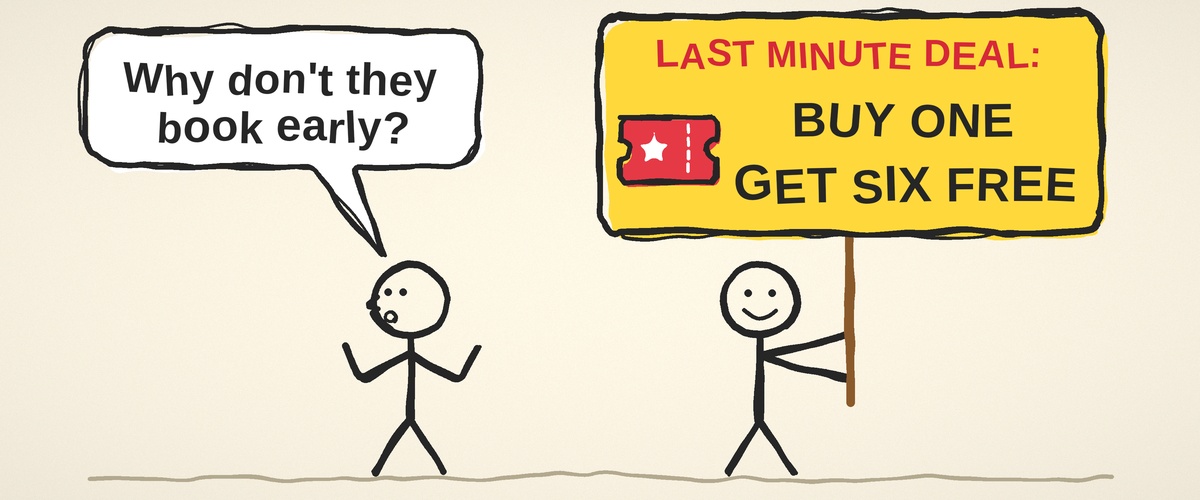
This is a killer. We’ve all had, at some point, a show sell so horrifically that the producer has demanded that you plaster deals anywhere you can, in a desperate attempt to put bums on seats. Buy one get one hundred free anyone? The problem is that not only devalues the product, it also devalues the theatre, the organisation too. If people think that waiting long enough might trigger an offer then they’ll start waiting later and later in case a better deal can be found. That’s not to say that offers should be always a no no – read here.
What next?
Want an external eye to help separate the wood from the trees? I’m pragmatic, to the point, practical and offer marketing advice to make you smile. Why not get in touch, tell me you arts marketing problems and see if I can help.
If you like this then please drop me a message, share this post if you think it’s good and feel free to join my mailing list!